
Let us now examine the most common scam schemes on Binance P2P, starting with the simplest and progressing to the more sophisticated ones.
1. Fake Payment Receipts
⛔️ 1. You own cryptocurrency, post an advertisement to sell it, and want to receive payment to your Armenian bank card or bank account. A user (a scammer) responds to your advertisement and agrees to purchase your cryptocurrency. After some time, the scammer marks the payment as completed and even provides a bank receipt as proof of payment. You may also receive an SMS message that appears to be from your bank stating that the funds have been credited to your card or bank account. Without checking your actual account balance, you confirm that you have received the payment, and your cryptocurrency is released from escrow.
However, when you later attempt to withdraw the money, you discover that no funds have actually been credited to your card or bank account because both the bank receipt and the SMS notification were fake.
👮🏼 Preventive measure: Always check the actual balance of your bank card or bank account before confirming that you have received the payment.
2. Chargeback
⛔️ This scheme is similar to the previous one, but in this case you actually receive the money in your bank account or on your bank card. However, as soon as you release your cryptocurrency, you receive a call from the bank informing you that the sender has requested a chargeback, claiming that their bank card was stolen and the payment was unauthorized. Although the funds are not immediately returned to the sender, the entire amount—and sometimes all of your accounts with that bank—may be frozen pending an investigation. The investigation may take months or even years.
We would also like to warn you that Armenian banks generally take a cautious approach toward cryptocurrency-related transactions. If the bank determines that a transaction is connected to cryptocurrency, it may unilaterally return the funds to the sender. If the payment was made from an Armenian bank card, it is generally easier to prove your case. However, if the funds were sent from a foreign bank card, there is a high probability that the money will be returned to the sender without your knowledge.
👮🏼 Preventive measure: Only agree to trade with users who have a good reputation.
3. Paired Transactions
In this scheme, you are also the owner of the cryptocurrency, you post an advertisement to sell it, and you want to receive payment to your Armenian bank card or bank account. Several users respond to your advertisement at the same time.
3.1. Two Transactions for the Same Amount
⛔️ For example, you want to withdraw AMD 150,000, and you receive two purchase requests for exactly the same amount (most often from the same scammer using different accounts). After some time, AMD 150,000 is credited to your account, but both buyers mark their transactions as paid. Which one actually sent the money?
If you release the cryptocurrency to the wrong account, your cryptocurrency will be transferred to the wrong user. The user of the second account will then open a dispute and win it, because from the exchange's perspective it appears that they sent you the money, while you failed to release the cryptocurrency to them. As a result, the exchange will once again deduct your cryptocurrency and transfer it to the second account.
3.2. Two Transactions for Different Amounts
⛔️ You want to withdraw AMD 150,000 and receive two purchase requests: one for AMD 50,000 and another for AMD 100,000.
You see AMD 50,000 credited to your bank account, and the buyer with the AMD 50,000 order marks the transaction as paid. You then release the corresponding amount of cryptocurrency.
Shortly afterward, you receive another AMD 50,000, and the buyer with the AMD 100,000 order also marks their transaction as paid. It turns out that the second buyer transferred the payment in two installments of AMD 50,000 + AMD 50,000 and is now waiting for their cryptocurrency. However, you have already released part of your cryptocurrency under the first order. When the second buyer opens a dispute, they will win it, and the exchange will forcibly deduct the remaining cryptocurrency from your account.
👮🏼 Preventive measure: If you receive two transactions simultaneously, always contact the buyer through the order chat and ask which payment details they used to send the money. This will help you verify which buyer actually made the payment.
4. The Triangle Scheme
⛔️ We came across this scam scheme on another resource and decided to share it as well. It is the most sophisticated scheme because it involves three participants: you, the victim, and the scammer. Let's take a look.
🔸 The Scenario:
You own cryptocurrency, post an advertisement to sell it, and want to receive AMD 500,000 to your Armenian bank card or bank account. You receive two purchase requests at the same time: one for AMD 250,000 (the victim) and another for AMD 245,000 (the scammer).
In the chat for the AMD 245,000 order, the buyer informs you that the payment will be sent from, for example, the bank card of Gor Hovhannisyan. Just a few minutes later, AMD 245,000 is credited to your account, and a payment receipt is sent in the order chat as proof of payment. You confirm that you have received the funds, and Binance releases your cryptocurrency from escrow, transferring it to that buyer.
Immediately afterward, the second buyer with the AMD 250,000 order (the victim) marks the transaction as paid and writes in the order chat that they have sent the payment receipt to you via Telegram and are waiting for your confirmation. However, you have not received AMD 250,000 in your bank account.
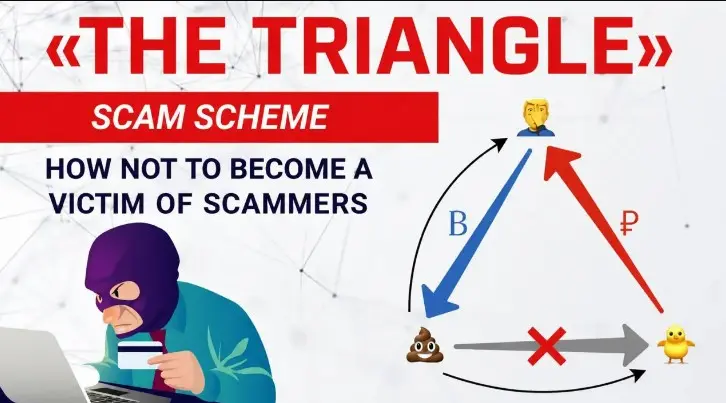
🔹 Background:
While purchasing cryptocurrency on Binance P2P, the victim completes several successful USDT trades with the same seller (the scammer). After a few transactions, the victim says they are willing to pay an additional few percent for ongoing trades. The scammer gradually builds trust with the victim, and they exchange Telegram contacts. However, all trades continue to be conducted exclusively through Binance.Typically, the seller (the scammer) opens a sell order for USDT worth AMD 250,000. The victim sends AMD 250,000 to the scammer's payment details, and the USDT is released to the victim. Immediately after each completed trade, the scammer transfers AMD 5,000 back to the victim as an additional bonus.
🔻 The Scam Scheme:
The scammer opens a trade with you for AMD 245,000 and simultaneously convinces the victim to open a trade for their usual amount of AMD 250,000, but this time with a different account (your account). The scammer instructs the victim to pay AMD 245,000 instead of AMD 250,000 (AMD 250,000 − AMD 5,000 bonus) using the payment details provided in the order—your payment details—so that there will be no need to send the bonus separately afterward.The scammer then asks the victim via Telegram to send the payment receipt and attaches that receipt to the Binance order chat with you so that you will confirm the payment. That's all.
As a result, the scammer purchases your USDT, but the payment for that purchase is made by the victim.
👮🏼 Preventive measure: Only agree to trade with users who have a good reputation and a large number of successfully completed transactions.