
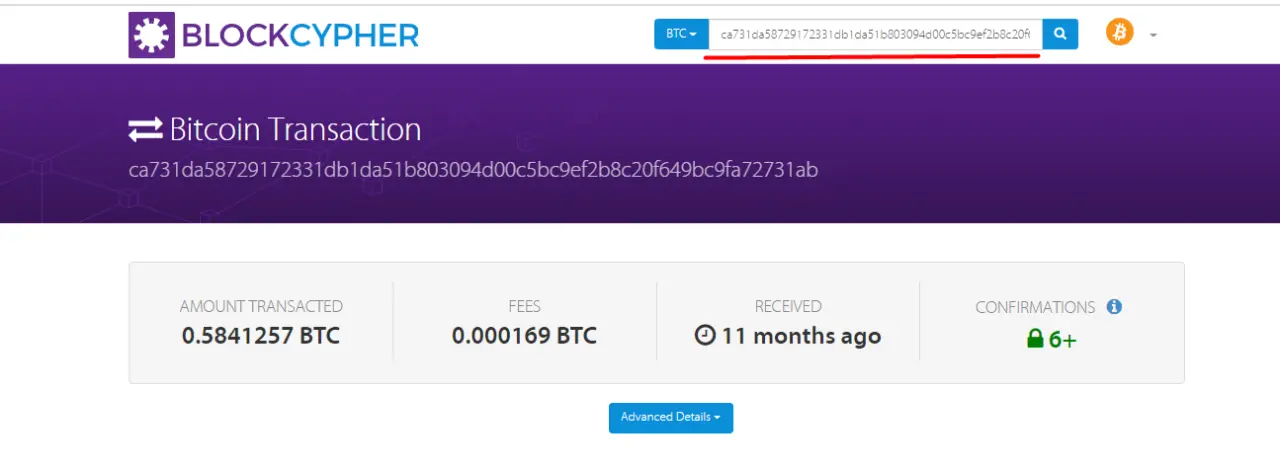
A Bitcoin transaction can be tracked using one of the special online services known as blockchain explorers. To do this, you need to know the transaction identifier, that is, its transaction hash. The transaction hash is entered into the search field of a blockchain explorer. The system then locates the transaction among millions of others and displays complete information about it, including its status—whether the transaction is confirmed or unconfirmed.
Confirmed and Unconfirmed Transactions
After a transaction has been signed by the user, it enters the mempool (the shared pool of unconfirmed Bitcoin transactions), where it waits until it is selected for inclusion in a block. Transactions in the mempool are prioritized according to the transaction fees attached to them. The higher the fee, the higher the transaction's priority in the queue and the greater its chances of being confirmed quickly. The current status of a transaction is displayed in a blockchain explorer. After entering the transaction hash into the search field, the explorer will display the relevant information. Next to the transaction status, you will see a number indicating that the transaction has been confirmed. This number represents the total number of confirmations the transaction has received.
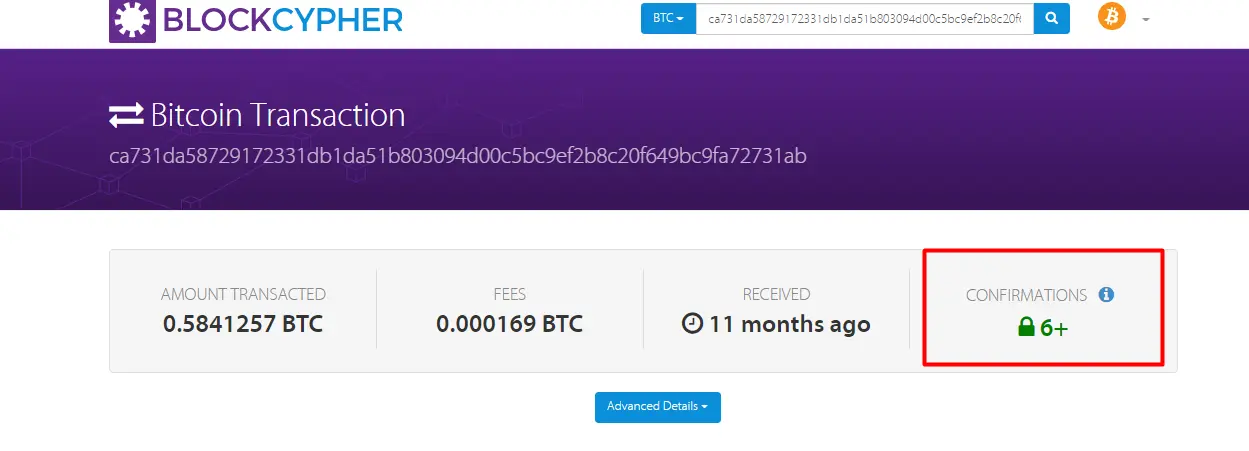
Six confirmations are generally considered optimal. At this point, the transaction can no longer be removed from the system, and the cryptocurrency transfer is considered securely completed. However, three confirmations are also generally regarded as an acceptable level of confirmation. If a red button labeled "Unconfirmed Transaction" appears next to the transaction details, it means that the transaction has not yet received any confirmations and therefore has not yet been included in a block by the miners.
What Affects Transaction Confirmation Speed
The speed at which a Bitcoin transaction is confirmed depends on the following factors:
- Transaction fee. The higher the transaction fee, the faster the transaction is likely to be confirmed.
- Network congestion. The more congested the network is, the longer it takes for a transaction to be confirmed. This is directly related to market volatility: the greater the price fluctuations, the more transactions users initiate, causing the network to become congested.
- Transaction size (in bytes). A large transaction may not fit into a block that is already filled with other transactions. In this case, the transaction remains in the network until the next block is created.
The transaction fee is the most important factor affecting confirmation speed. In the Bitcoin network, the total transaction fee is calculated as the product of the transaction weight and the network fee rate (satoshis per byte). Since the fee rate is constantly changing, the current recommended fee should be checked using a blockchain explorer. To speed up transaction confirmation, it is recommended to set a fee that is higher than the current recommended network fee.
What to Do If a Transaction Is Stuck
If a transaction remains unconfirmed for a long time, you can take one of the following actions:
- Wait for the transaction to be confirmed.
- Wait for the transaction to be canceled.
- While the transaction is still in the mempool, increase its transaction fee using one of the following mechanisms:
- Replace-by-Fee (RBF),
- Child Pays for Parent (CPFP).
- Use special transaction accelerator services.
Replace-by-Fee (RBF)
The Replace-by-Fee (RBF) feature allows you to modify an existing transaction while it is still in the mempool. The modification consists of increasing the transaction fee, while the INPUTS and OUTPUTS remain unchanged. The network treats the modified transaction as the same transaction. After the fee is increased, it is moved to a higher position in the queue, increasing the likelihood of faster confirmation.
The fee adjustment process consists of the following steps:
- Open your transaction history.
- Select the pending transaction and click "Increase Fee."
- In the window that opens, set the current fee rate per byte.
- Click "Send." You should then receive the notification "Your transaction has been successfully sent."
- After the update is completed, the system will assign the transaction a new transaction hash.
It should be noted that the RBF feature is not available in all cryptocurrency wallets. In addition, some wallets include this functionality but have it disabled by default. Therefore, when choosing a wallet, it is important to verify that this feature is available and to enable it before using it.
Child Pays for Parent (CPFP)
Another popular method of accelerating a transaction is Child Pays for Parent (CPFP). The basic principle of this method is that the user creates a new child transaction based on the original transaction and assigns it a significantly higher transaction fee.
How Child Pays for Parent (CPFP) Works. How to Use the Change Output
It is common for the sender's INPUTS to contain significantly more coins than they intend to transfer to the recipient. However, according to the Bitcoin protocol, when creating a transaction, the entire INPUT must be spent. As a result, the sender is required to include the full amount of bitcoins available in that INPUT, including any excess funds. Cryptocurrency wallet developers solved this issue by introducing the change feature. By calculating the difference between the INPUT and the OUTPUTS, the wallet automatically creates a second OUTPUT that returns the remaining amount back to the sender. This feature is called change and can be used in any Bitcoin transaction. It is also a key component of the Child Pays for Parent (CPFP) method.
The CPFP feature works as follows.
- If a transaction (hereinafter referred to as the parent transaction) remains unconfirmed in the queue and has generated a certain amount of change, the sender can use that change to create a new child transaction with a significantly higher transaction fee. It is important that the fee of the child transaction is high enough to cover the total fee required to process both the parent and the child transactions.
- As a result, a package of transactions (the parent and the child transactions) is created. Because of the higher combined fee, this package becomes more attractive to miners and is likely to be confirmed in the near future.
The effectiveness of this method is based on the fact that a miner cannot confirm only the child transaction, even though it offers a more attractive fee. To receive that fee, the miner must process the entire transaction package, including the parent transaction.
Transaction Accelerators
Transaction accelerators are specialized services that, for a fee, help include a specific transaction in a block without waiting for the normal queue. As a result, they can significantly speed up transaction confirmation. To use these services, you need to know the transaction hash. The cost of transaction acceleration varies between services. Some of them charge a fee only for transactions with very low transaction fees or for high-priority transfers. In addition, an accelerator may charge an extra fee for transactions with a transaction size exceeding 250 bytes.